

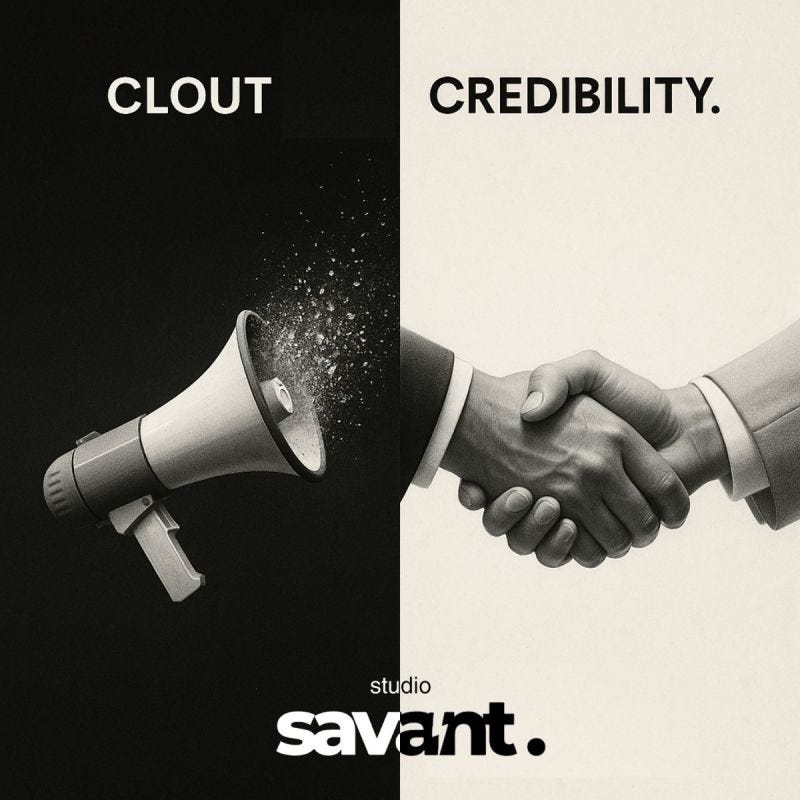
In the digital age, your online presence often becomes your first form of evidence. For professionals and founders seeking the EB1A visa, a classification reserved for individuals with extraordinary ability. This digital footprint can help or harm your case more than you realize.
We’ve all heard stories of applicants trying to look impressive on LinkedIn, branding themselves as “Founder and CEO of a Silicon Valley Startup” while still on a visitor or student visa. Yet what might seem like harmless self-promotion can quickly become a red flag.
Immigration authorities increasingly review social media as part of their vetting process. When they come across titles or posts implying unauthorized work, such as “actively building” a business in the U.S. while on a visitor visa, it can suggest a violation of immigration status. Even unintentional misrepresentation can lead to delays or denials, especially if your self-published claims don’t align with your official immigration record.
For EB1A applicants, credibility is built through verified achievements, not self-proclaimed importance. Officers look for independent recognition, media coverage, peer citations, industry awards, leadership evidence which is supported by documentation. A flashy profile filled with exaggerated titles might raise more questions than respect.
If you are in the U.S. on a status that limits or prohibits employment, be mindful of how you describe your activities online. Saying you’re “establishing partnerships globally” or “advising a team remotely” is accurate and compliant, unlike wording that suggests active U.S. business operations.
When shaping your professional narrative, ask yourself:
Does this description reflect activities I am legally authorized to perform?
Can I support each claim with objective evidence?
Am I presenting a credible track record rather than an inflated persona?
In immigration, authenticity is power. The smartest applicants focus on substance which is verifiable results, documented leadership, and peer recognition, rather than performative visibility. You don’t need to look extraordinary online; you need to be extraordinary in truth and evidence.
Your credibility, not your clout, will ultimately earn you that approval notice.
Online Profiles Under Scrutiny: Free Audits to Protect Your EB1A and H1B Journey
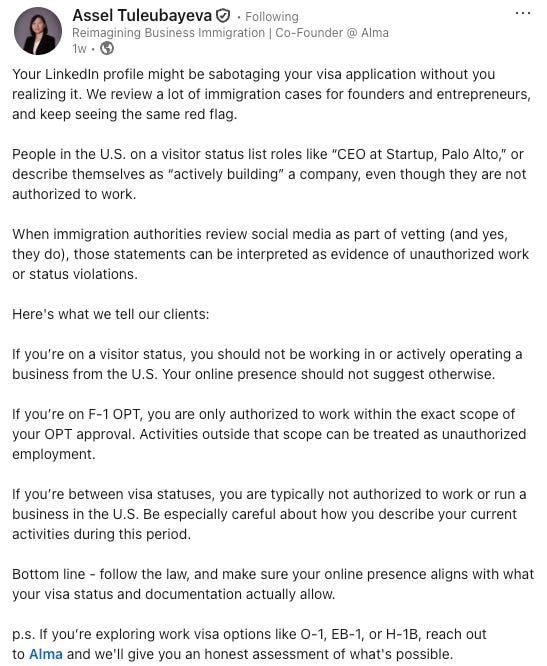
Your LinkedIn headline or bio can make or break your immigration case without you knowing it. Founders and professionals on visas like EB1A (extraordinary ability) or H1B often showcase ambitious roles like “CEO building in Silicon Valley,” but this risks signaling unauthorized work to USCIS reviewers who scour social media.
Immigration experts like Assel Tuleubayeva of Alma highlight how visitor visa holders listing U.S.-based CEO titles or “actively building” claims get flagged for status violations. Ryan Grant, a U.S. Marine Corps officer and data analyst (LinkedIn: rygrant11), echoes this in his comment: “This is fantastic advice! I would not want anyone to get into legal limbo with their H1B status.” He offers free DM reviews to check if your profile violates visa rules or the 1990 Immigration Act requirements.
Pro Bono Power: Strong Words That Elevate Your Immigration Profile
Strong, professional terminology like “pro bono consulting,” “volunteer expertise,” or “advisory contributions” can transform how immigration officers view your online presence. For EB1A and H1B applicants, these precise phrases signal credible leadership without implying unauthorized U.S. work, directly addressing warnings from experts like Assel Tuleubayeva and Ryan Grant.
Why Word Choice Matters
Immigration authorities scrutinize LinkedIn and social media for status violations. Bold self-descriptions like “CEO building in Palo Alto” on a visitor visa trigger red flags, while “pro bono consulting for global startups” showcases impact safely. Ryan Grant (rygrant11) offers free profile audits to spot these risks, emphasizing compliance with the 1990 Immigration Act.
Top Strong Phrases to Use
Pro bono consulting for industry leaders
Volunteer strategic advisor (remote)
Unpaid expertise in [your field]
Advisory contributions to open-source projects
Mentorship for international founders
These terms highlight extraordinary ability through service, aligning with EB1A’s evidence criteria like peer recognition.
Top Phrases to Avoid
Actively building U.S. company or Product
Founder of [Company]
Operating startup from [U.S. city]
Full-time CEO at [venture]
Hands-on leadership in America
Key Risks for EB1A Applicants
EB1A demands verifiable, independent proof of extraordinary ability like awards, media, peer recognition, not self-promotion. Overexposure backfires when:
Visitor/F-1 profiles imply U.S. operations (”Palo Alto Founder”).
H1B descriptions exceed approved job scope.
Gaps between statuses show “business leadership” without work authorization.
USCIS interprets these as red flags, potentially triggering RFEs, denials, or future inadmissibility.
Build Credible Visibility
Focus on compliance and evidence:
Use phrases like “remote global team lead” over “U.S. startup operator.”
Link to third-party validations (press, citations) instead of boasts.
Align every claim with your I-94 or EAD scope.
Ryan Grant’s free service scans for these issues, drawing from public USCIS data trends. DM him via LinkedIn to submit your profile he’s offered this to avoid “legal limbo.”
Action Steps
Audit your LinkedIn, Twitter, and personal sites today.
Replace risky wording with status-safe alternatives.
Get a free review from Ryan (rygrant11) before USCIS does.
Credibility wins visas. Polish your profile to reflect real achievements, not hype your green card depends on it.