

Better Model Is Not Attorney First Or Applicant First. It Is Evidence First.
That is why a merit evaluation platform makes sense
There are moments when a person knows, deep inside, that they have done the work.
They have built something from nothing. They have stayed late, solved hard problems, led teams, earned respect, created value, and made a mark that people around them can see. Their merit is not imagined. It is lived. it happened to me.
And yet, when it comes time to prove it, they are suddenly standing in front of a wall.
That is the painful part.
Not the lack of achievement. The lack of a way to show it.
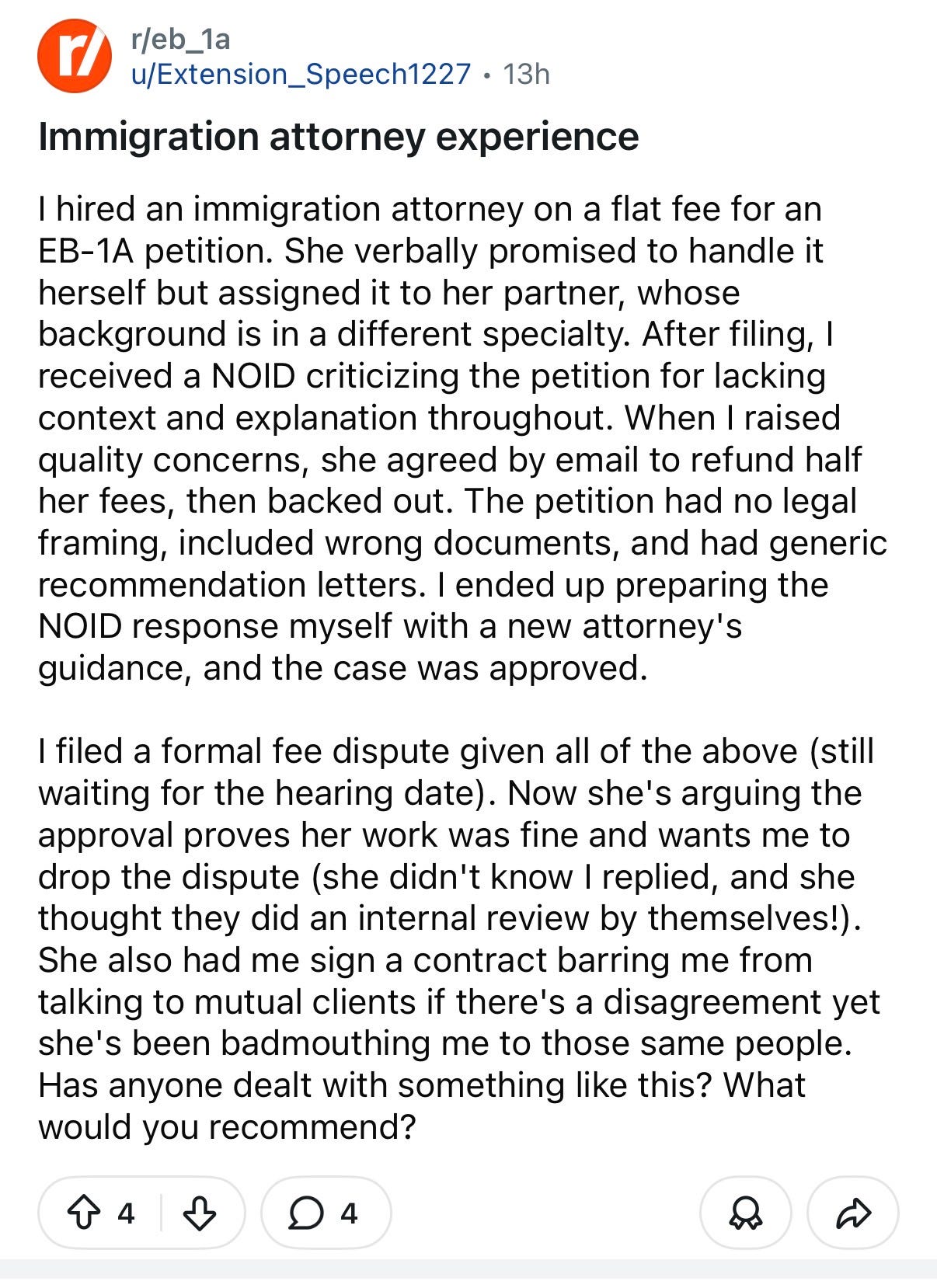
I saw a story recently that captured this exact tension. A person hired an immigration attorney, trusted the process, and expected the case to be handled with care. Instead, the filing lacked context, the supporting materials were weak, and the story of the applicant’s work never came through clearly. The petition was criticized for missing explanation and framing. The applicant, who knew the case better than anyone, ended up helping rebuild the response almost from scratch.
That kind of experience leaves a mark.
Because it is not just about a form or a filing. It is about being misunderstood at the moment you need to be understood most.
It is heartbreaking when someone with genuine merit has to fight not only to be recognized, but to be translated.
That is why merit evaluation matters so much.
A real merit evaluation is not just paperwork. It is a bridge between what a person has done and what the system can understand. It takes the scattered pieces of a life’s work and turns them into a story that can actually survive scrutiny. It asks, What did this person really build? Why does it matter? How do we prove it in a way that is clear, fair, and defensible?
Without that bridge, even strong people can look weak. Their impact becomes invisible. Their accomplishments become vague. Their story becomes someone else’s guess.
And that is where so many applicants are hurt.
They are not lacking merit. They are lacking a language for it.
That is why the most important question is not always, Is this person exceptional? Often the real question is, Can we prove it well enough for the people who need to see it?
For too many applicants, the answer has been no, not because they were undeserving, but because the process was never built to understand them clearly.
That is what makes merit evaluation so powerful. It gives structure to truth. It gives shape to evidence. It gives a person’s work the dignity of being seen properly.
And sometimes, that is the difference between being dismissed and being approved.
Why Applicants Need Better Tools
Applicants are often the best source of truth about their own careers, but they usually are not trained in legal framing. Attorneys, meanwhile, may understand immigration law but not the technical, scientific, business, or creative context behind the work. The result is uncertainty on both sides.
That is why a merit evaluation platform makes sense. It can help translate evidence into a structured case profile, highlight what actually demonstrates impact, and show where the record is thin. It does not replace legal judgment. It improves the quality of what legal judgment has to work with.
A Better Model
The better model is not attorney first or applicant first. It is evidence first. Start with the actual work, measure the strength of the proof, identify the missing links, and then build the legal strategy around that reality.
For applicants, that means fewer surprises and fewer generic filings. For attorneys, it means a cleaner record, stronger narratives, and less time untangling unclear facts. For the system, it means better alignment between merit and proof.